Why the Best Mesh WiFi System May Still Be the Wrong Choice
Premium homes require more than consumer wireless gadgets. When concrete, bandwidth demands and Kenyan electrical infrastructure change the RF equation, network design must begin with the property itself.
You have just completed a premium residential build or interior overhaul. Whether it is a sprawling, multi-level villa in Runda, Kitusuru, or Muthaiga, a bespoke architectural masterpiece nestled in the green pockets of Karen, or a high-end luxury penthouse along Riverside Drive or Westlands, the finishings are immaculate.
Naturally, you expect your home connectivity to be flawless. To eliminate dead zones, you do what most consumers do: you search for the best mesh wifi system on the market.
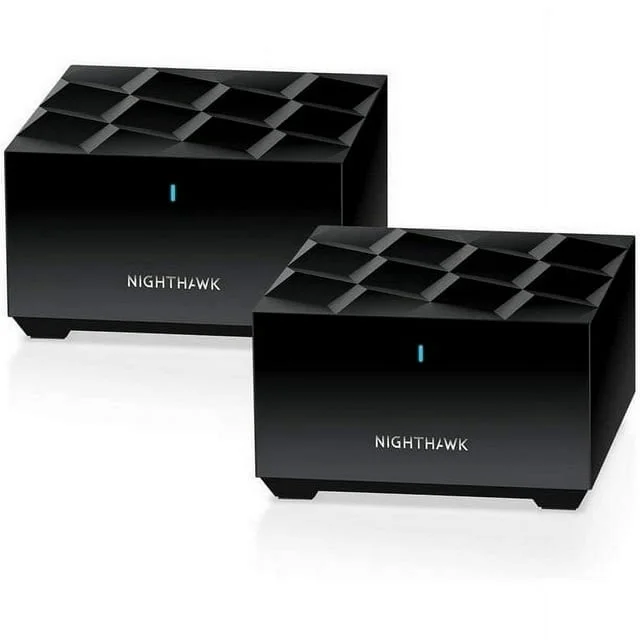
You invest in a heavily marketed, top-tier consumer wireless mesh wifi system—spending upwards of KES 50,000 to KES 120,000 on a slick, glossy three-pack of retail pods (like Netgear Orbi, Linksys Velop, or TP-Link Deco). The marketing material promises that a modern mesh wifi system will deliver a “seamless, wire-free, drop-and-go gigabit blanket” across your entire property.
Yet, the moment you step into the first-floor master suite or your home office, the reality of the performance drop sets in.
Video loops buffer. International corporate Zoom calls drop frames. High-fidelity audio streams stutter, and smart security feeds lag. Despite paying for a premium fiber circuit, your expensive wireless mesh wifi system is choking.
At Qubit ICT Solutions, we deal with this exact scenario weekly. The problem isn’t your internet provider, and it isn’t a defect in your specific retail hardware. The problem is that the global consumer networking industry has sold a wire-free myth. The standard wireless mesh wifi system is fundamentally incompatible with the physical laws of radio frequency (RF) propagation and the realities of Kenyan structural engineering.
Premium Kenyan homes can undermine wireless mesh performance through concrete slabs, dense masonry and demanding connected-device loads. Qubit ICT Solutions advocates engineering-first hybrid deployments that use structured cabling or G.hn backhaul to create stable local infrastructure, preserving wireless capacity for devices while delivering dependable whole-home connectivity.
The Operational Mandate: Why We Disqualify the Standard Mesh Wi-Fi System
Premium residential networking begins with the physical environment, not the marketing label on a retail networking box.
At Qubit ICT Solutions, we do not design enterprise or premium residential networks based on retail box stickers, theoretical marketing datasheets, or generic online reviews written for Western suburban homes.
During our rigorous structural site audits—whether navigating luxury properties in Nyari, Rosslyn, Gigiri, and Spring Valley, or auditing premium multi-story developments in Kilimani, Kileleshwa, and Lavington—we empirically approve or disqualify network hardware based on the physical environment.
[Physical Architecture Audit] ➔ [Empirical RF Validation] ➔ [Infrastructure Qualification]
                                                                                 (Pass ➔ Structured / PLC Backhaul)
                                                                 (Fail ➔ Retail Mesh Wi-Fi System Disqualified)
Premium residential architecture demands a clean, intentional aesthetic language. Tossing glossy plastic consumer mesh wifi system pods onto bespoke hardwood consoles, or allowing unsightly power cables to trail down minimalist walls, compromises the design integrity of a home.
More importantly, if a home’s layout violates the basic physics of RF transmission, Qubit ICT Solutions disqualifies a standard wireless mesh wifi system immediately. We shift the narrative away from temporary retail gadgets and toward treating data delivery as permanent infrastructure.
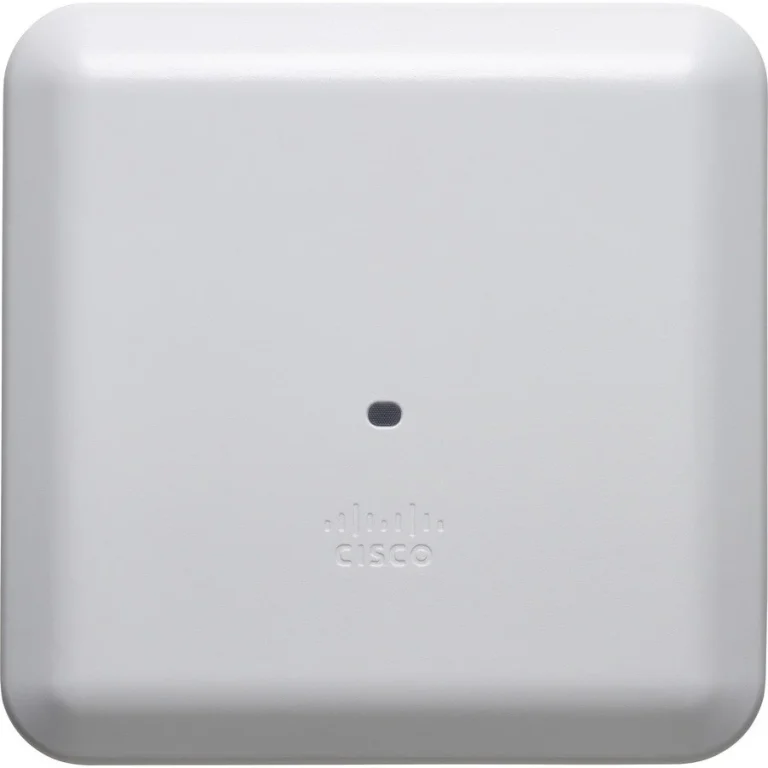
While institutional-grade access points carry a more industrial, utilitarian appearance compared to a consumer mesh wifi system, they represent permanent digital sovereignty. A premium home deserves utility-grade infrastructure for its data networks, just as it does for its plumbing and electrical systems.
Four reasons to engineer your premium home network properly
Structural RF Performance
Dense concrete, masonry and reinforced slabs can severely undermine wireless backhaul performance between mesh nodes.
Stable Local Backbone
Structured cabling or advanced G.hn backhaul can provide a more dependable infrastructure layer than wireless node-to-node links.
Better Use of Bandwidth
Hardwiring the network backbone preserves wireless airtime for laptops, phones, smart home appliances and other client devices.
Permanent Infrastructure
A professionally engineered network treats digital connectivity as permanent home infrastructure rather than a collection of temporary retail gadgets.
The Core Barrier: The Vertical Slab Shield vs. The Wireless Backhaul
Building materials can determine whether a wireless mesh architecture remains efficient or becomes the bottleneck in the network.
To understand why a wireless mesh wifi system fails so spectacularly in high-end Nairobi estates, you must look at the building materials.
A consumer mesh wifi system relies on a concept called wireless backhaul—the nodes use the airwaves to talk back to the main router. Modern high-frequency Wi-Fi bands used by these systems (the crowded 5GHz spectrum and the newer 6GHz band) rely on ultra-short wavelengths. While these short waves deliver high throughput at close range, they have incredibly poor penetration capabilities. They suffer severe, destructive attenuation (signal loss) when encountering dense mass.
Wireless Mesh Node ──> [ 6-Inch Steel-Reinforced Concrete Slab ] ──> 70% Signal Loss (Choked Backhaul)
In Western suburban markets, homes are predominantly built using timber frames and hollow drywall partitions, which radio waves pass through with minimal resistance. This is the environment a retail mesh wifi system was engineered for.
In contrast, luxury residences across the Nairobi Metropolitan area—from Muthaiga North and Ridgeways to commuter residential hubs like Ruiru, Juja, Syokimau, Kitengela, Rongai, and Kiambu Road—are engineered like fortresses. They are built with thick natural stone, dense brick masonry partitions, and massive, steel-reinforced solid concrete floor slabs.
When you place one node of a mesh wifi system on the ground floor and its companion node directly above it on the first floor, that concrete slab behaves like a grounded RF shield. Attempting to establish a wireless backhaul link vertically through that mass drops the system’s interconnectivity capacity by up to 70%. The nodes spend their processing power and airtime fighting to talk to each other, leaving next to nothing for your actual client devices.
Sizing the Highway to the WAN Pipe: The Mesh Wi-Fi Fallacy
Network hardware should be evaluated against the actual WAN connection, local traffic requirements and the stability of the internal backbone.
The networking industry loves to distract buyers searching for a mesh wifi system with massive cumulative throughput stickers: 5.4Gbps,11Gbps, or 19 Gbps. This is a logical fallacy when bounded by your actual Wide Area Network (WAN) gateway—the internet pipe coming into your house.
Consider the actual residential fiber landscape delivered to estates and gated enclaves like Tatu City (Kijani Ridge), Thika Greens, or Sigona Valley:
| ISP Provider | Tier Level | Typical Bandwidth | Local Operational Reality |
| Safaricom Home Fibre | Bronze / Silver | 40Mbps – 60Mbps | Strict Fair Usage Policies (FUP) apply (e.g., 1.5TB thresholds). |
| Zuku Fiber | Shujaa / Bingwa | 30Mbps – 80Mbps | Standard volume residential baseline. |
| Premium Dedicated Loops | Gold / Platinum | 150Mbps – 500Mbps | High-end executive/enterprise residential links. |
If your incoming internet pipe is a steady 40 to 80 Mbps, paying an astronomical premium for a volatile, unstable multi-gigabit wireless mesh wifi system just to traverse rooms is fundamentally illogical. You do not need a multi-gigabit wireless skyway; you need a low-latency, stable local backbone that guarantees 100% delivery of that subscription tier across your property.
Furthermore, under strict Fair Usage Policies where heavy data consumption is throttled after reaching a monthly threshold, a household cannot afford a packet-dropping wireless backbone. The constant data retransmissions caused by a struggling mesh wifi system artificially inflate internal traffic, cause latency spikes, and degrade your overall user experience.
The Untapped Asset: Replacing Wireless Mesh with Kenya’s Single-Phase Copper Grid
Existing electrical infrastructure can become an important part of a professionally engineered residential networking strategy.
The lost opportunity of the modern home network deployment is the omission of the home’s existing copper infrastructure. Many consumers looking for a mesh wifi system assume powerline technology is a dead gimmick from the early 2010s. That is an expensive misunderstanding.
While the consumer market stopped hyping it to push wireless mesh alternatives, the underlying engineering evolved. Modern powerline integration utilizes the G.hn Wave 2 standard and 2×2 MIMO (Multiple-Input Multiple-Output). Instead of pushing data solely down the Live and Neutral lines, modern G.hn adapters split the data streams and transmit simultaneously across:
- Live + Neutral
- Live + Earth Ground
                ┌───> Live + Neutral ───┐
G.hn Wave 2 ───┤                       ├───> Real-World 600 - 800 Mbps Link
                └───> Live + Ground ────┘
This structural shift allows the system to completely bypass appliance-induced RF noise (like phone chargers or LED dimmers), delivering a clean, real-world 600 to 800Mbps local backbone to feed your access points.
Here is where the regulatory environment of the Kenyan electrical code creates a massive, unfair advantage for the local homeowner over Western counterparts. By law, domestic supply entries reaching a residential distribution board (consumer unit) in Kenya are strictly mandated to be single-phase (230V, 50Hz), even if a 3-phase line feeds the property boundary pole.
For properties built or renovated within the last two decades across the Nairobi Metropolitan area—from the luxury estates of Karen and Runda to developing premium zones like Athi River or Mombasa’s Vipingo Ridge—this legal framework completely deletes the “phase-crossing barrier” that breaks powerline tech in Western multi-phase homes.
Your home is already pre-wired with a unified, high-grade, PVC-insulated copper grid sharing a single physical phase. G.hn technology treats this copper as a virtualized, shielded local gigabit backbone—providing a massive 10 times to 20 times performance headroom over your incoming WAN package without drilling a single hole or running an exposed cable. It delivers everything you wanted from a mesh wifi system, but with hardwired stability.
The Qubit ICT Solutions Integration Philosophy
Professional residential networking works with the property’s physical infrastructure instead of attempting to overpower it.
True network integration means working in harmony with physics and local building infrastructure, not fighting them with retail gadgets.
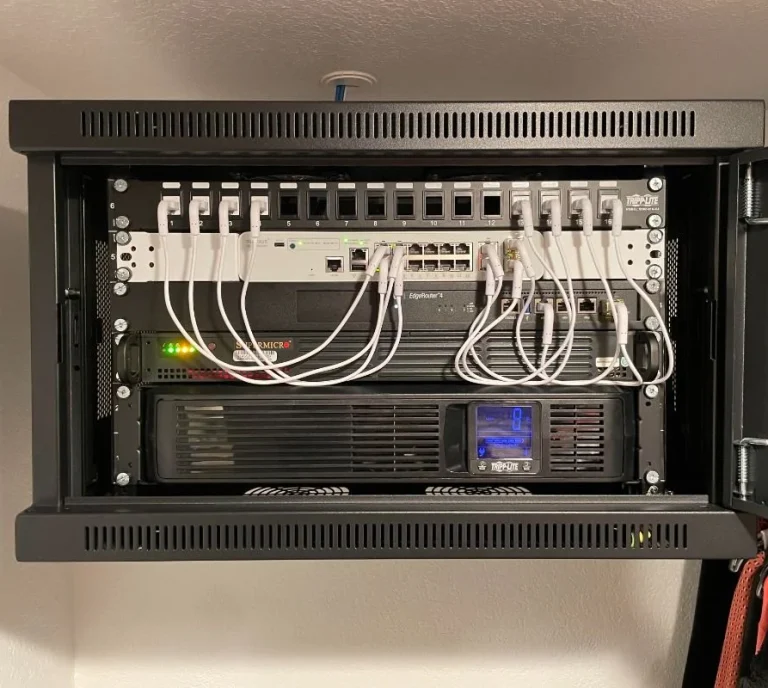
At Qubit ICT Solutions, we advocate for clean, engineering-first Hybrid Deployments. If you want the seamless roaming behavior of a mesh wifi system, we deliver it by leveraging the physical assets of your property—utilizing your existing single-phase copper grid via advanced G.hn backhauls or installing discrete, hidden structured cabling—to feed dedicated, permanently mounted access points.
By hardwiring the backbone of your network, we preserve 100% of the wireless airtime exclusively for your mobile devices, laptops, and smart home appliances. The result is zero jitter, absolute stability, and uncompromised digital sovereignty for the resident.
Engineer the Network Around the Property
Stop trying to fix concrete walls with retail wireless gimmicks. Let’s engineer your network properly.
From Retail Connectivity to Permanent Digital Infrastructure
Premium residential connectivity should be designed around the actual building, electrical infrastructure, WAN requirements and expected device load. The goal is not simply to install the most heavily marketed mesh wifi system, but to create a stable local backbone that allows the wireless network to perform at its best.
The Qubit ICT Solutions approach is therefore centered on engineering-first Hybrid Deployments, using advanced G.hn backhauls or discrete, hidden structured cabling to feed dedicated access points while preserving the clean aesthetic expected in premium homes.
Stop Fighting Concrete. Engineer Around It.
If your premium home’s mesh wifi system is struggling, let Qubit ICT Solutions assess the property and design the right backbone for dependable whole-home connectivity.