Why Premium Internet Fails Without a Premium Network
Gigabit WAN bandwidth cannot compensate for weak internal infrastructure. For modern enterprises, the LAN is the central nervous system that determines how reliably technology actually performs.
You see it in almost every high-end corporate boardroom in Westlands or Upper Hill: a magnificent, million-shilling Poly Studio 4K Intelligent Video Bar or a modular Logitech Rally Plus System mounted flawlessly on the wall. The organization is paying for a premium, blazing-fast Gigabit Wide Area Network (WAN) fiber pipe from a tier-one ISP.
Yet, ten minutes into an international pitch or a critical hybrid board meeting, the feed pixelates. The audio drops frames. A painful, familiar voice cuts through the static: “Can you hear me? Your screen is frozen.”
When premium Unified Communications (UC) hardware falls flat on its face despite massive internet bandwidth, decision-makers almost always blame the hardware vendor or fire off an angry email to the ISP. But the diagnosis is rarely external.
In the Nairobi Metropolitan Area and across the expanding commercial hubs of East Africa, “bad Wi-Fi” is almost never an internet bandwidth problem. It is an internal infrastructure architecture failure. Enterprises are bleeding capital at the gate because they treat their Local Area Network (LAN) as a low-interest IT afterthought rather than the non-negotiable central nervous system of their estate.
Premium internet bandwidth cannot rescue an under-engineered LAN. Resilient enterprise connectivity depends on structured cabling, appropriate fiber and copper backbones, intelligently deployed wireless, and infrastructure designed around actual building conditions. Qubit ICT Solutions treats the network as permanent operational infrastructure rather than an afterthought, reducing latency, downtime and avoidable technology costs.
The Fatal Executive Misunderstanding: Internet vs. Network
Understanding the boundary between WAN bandwidth and internal LAN architecture is the first step toward building a resilient enterprise technology environment.
To build a resilient enterprise ecosystem, CEOs, Hotel General Managers, and School Directors must understand the stark boundary between two distinct technical realities: The Internet and The Network.
- The Internet (The WAN Pipe): This is the external pipe managed by your Internet Service Provider. Its sole job is to transport data from the global web to your property’s boundary line. It gets the data to your gate.
- The Network (The LAN): This is your internal distribution system. It includes your structured cabling, core switches, access points, and routing logic. It dictates whether that data can actually navigate your building, penetrate heavy concrete floor slabs, and reach your devices without losing packets or adding crippling latency.
Bandwidth Is Not Distribution
If your internal LAN lacks a rugged, structured backbone, paying for a bigger fiber package is like trying to force a river through a soda straw. You are paying for capacity you literally cannot distribute.
The Silent Productivity Drain: Three East African Use Cases
The financial impact of poor network architecture extends beyond slow browsing. It affects productivity, reputation, guest satisfaction and institutional performance.
To understand the true return on investment (ROI) of precision-engineered network architecture, we have to look past the casual annoyance of slow page loads and calculate the hidden financial leakages across three core high-liquidity corridors.
Corporate Offices: The Cost of Time Theft
In the heavy, concrete-and-glass commercial complexes of Nairobi, Kilimani, and Gigiri, or growing corporate hubs in Mombasa and Kisumu, bad network distribution is a direct hit to the bottom line.
- The Hidden Cost: Consider a mid-sized firm with 50 employees. If each employee loses just 10 minutes a day to dropped network reconnections, spinning wheels during file syncs, or resetting consumer-grade routers, that equals over 160 hours of paid productivity evaporated every single month.
- The Prestige Penalty: Dropping a pitch to an international investor because your boardroom’s local wireless handoff failed doesn’t just cost time—it permanently damages institutional trust.
Hotels & Luxury Lounges: The “One-Star Review” Multiplier
From high-density conference venues along Mombasa Road to luxury safari lodges and boutique hospitality hubs in Arusha and Moshi, Wi-Fi is no longer an amenity; it is a core utility tied directly to occupancy rates and room yields.
- The Hidden Cost: Corporate event planners and business travelers will tolerate an average meal, but they will blacklist a venue permanently if the wireless network drops during an AGM or a high-stakes conference.
- Brand Bleeding: A single scathing review on TripAdvisor or Booking.com explicitly citing “unusable Wi-Fi”forces hotels into defensive room discounting and drives corporate event bookings straight to competitors who treat RF (Radio Frequency) mapping seriously.
Educational Institutions: The Hybrid Learning Bottleneck
Across the Thika Road Corridor, Juja, Eldoret, and Karen, institutions market themselves as “modern, tech-forward campuses” featuring virtual learning environments (VLEs) and digital research labs.
- The Hidden Cost: When a lecture hall of 200 students logs in simultaneously to access a cloud-based exam or stream a live seminar, poorly engineered networks experience a complete traffic collapse. Professors waste 15 minutes of an hour-long session troubleshooting connectivity, creating immense instructional friction and reputational erosion among tech-savvy parents and students.
Four reasons to engineer the network behind the bandwidth
Protect Productivity
A resilient LAN reduces wasted employee time caused by dropped connections, file synchronization delays, reconnections and unreliable internal wireless handoffs.
Maximize WAN Investment
A properly engineered internal backbone allows organizations to actually distribute and use the capacity they are already purchasing from their ISP.
Build for the Building
Structured cabling, fiber and calculated wireless deployment account for reinforced concrete, structural steel, acoustic glass and other real-world RF challenges.
Control Long-Term Costs
Intelligent infrastructure and license-free controller architectures can reduce recurring operational expenses while preserving enterprise-grade network control.
Structured Cabling: The Architecture Behind the Concrete
Network infrastructure should be designed into the building, not improvised after construction is complete.
The fundamental mistake is treating network infrastructure as a cosmetic fix to be layered onto a space after the walls are painted. True network resilience requires an architecture-first approach.
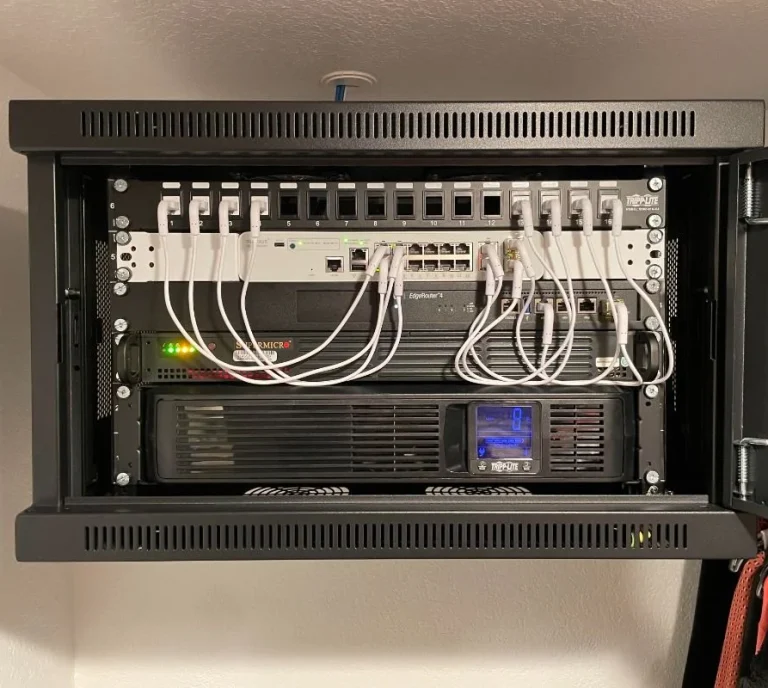
Structured Cabling (Cat6A/Cat7) must be treated as a critical structural planning component integrated directly into the initial blueprint and construction phases of a commercial building or campus. Modern building materials in East Africa—dense reinforced concrete, tinted acoustic glass, and structural steel—are highly efficient RF shields. If you fail to design clean, dedicated cable pathways, high-throughput containment, and strategic core distribution rooms early, you condemn your organization to destructive, highly expensive retrofitting costs down the line.
Using cheap, unshielded copper-clad aluminum (CCA) lines or improvising cable runs around electrical lines introduces electromagnetic interference that permanently degrades your network’s data packet integrity, regardless of how fast your internet connection is.
Infrastructure Must Be Planned Before the Finish
The network should be treated as part of the building’s architecture rather than a cosmetic layer added after the walls are painted. Early planning reduces expensive retrofitting and creates cleaner, more reliable infrastructure.
Breaking the Subscription Trap: Elite On-Premise Control
Enterprise network control does not always need to mean perpetual cloud licensing and recurring software expenditure.
As organizations scale, many fall into another commercial trap: cloud-managed wireless platforms that lock businesses into perpetual, aggressive annual subscription renewals. If you fail to pay the license fee, your access points effectively become expensive paperweights.
An elite engineering approach favors intelligent, decentralized, and license-free virtual controller architectures that offer enterprise-grade control without an endless operational cost (OpEx) bleeding cycle.
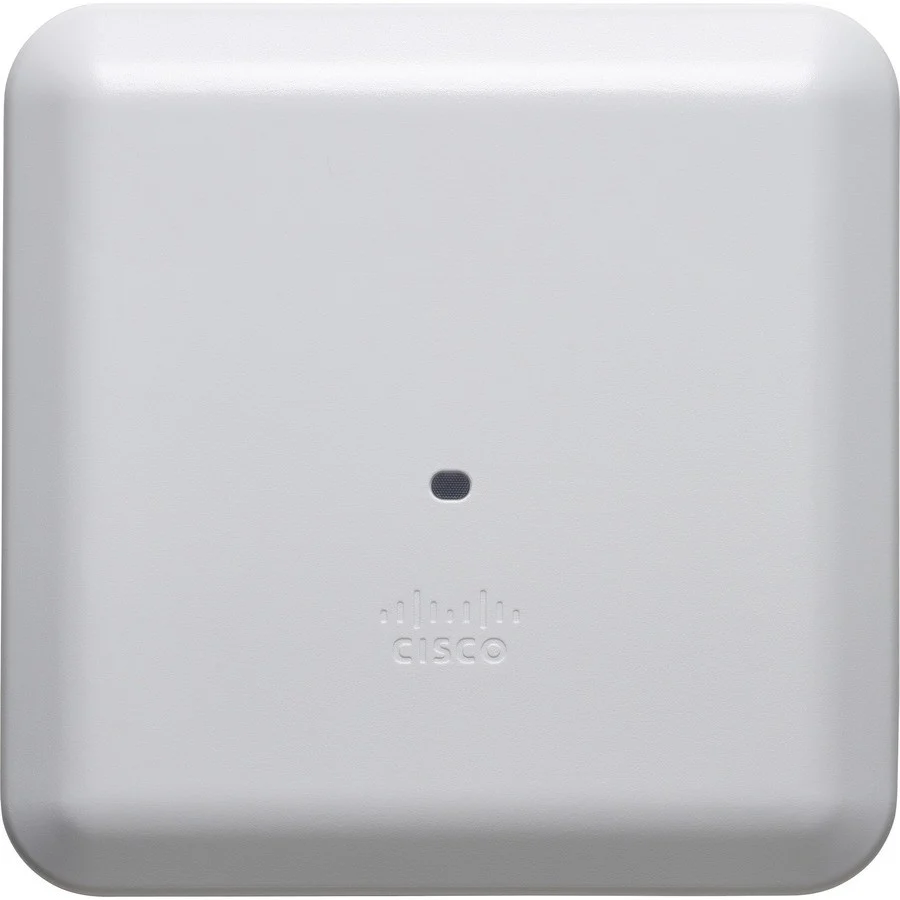
- Cisco Mobility Express: Delivers elite, enterprise-grade virtual controller functionality embedded directly on the access points themselves, completely eliminating the cost of separate hardware controllers or recurring cloud licensing.
- Ruckus Unleashed: Leverages Ruckus’s premier BeamFlex adaptive antenna technology to optimize high-density spaces dynamically, bypassing recurring software overhead while delivering exceptional signal penetration.
- Extreme Networks WiNG Platform: Built for mission-critical, high-density campus and industrial environments. Its legendary decoupled control plane ensures that even if a central management point goes offline, the distributed access points maintain full local intelligence and keep your operations moving without a millisecond of interruption.
The Precision Approach: Media-Agnostic Engineering
A resilient network uses different physical media strategically, matching the technology to distance, interference, density and operational requirements.
A resilient network cannot be built out of a one-size-fits-all hardware catalog. True network engineering requires deep media agnosticism—knowing precisely when, where, and why to deploy specific physical layers to achieve flawless interoperability.
                  [ ENTERPRISE NETWORK BACKBONE ]
                                 |
         +-----------------------+-----------------------+
         |                       |                       |
 [ SOLID COPPER ]         [ FIBER OPTICS ]       [ HIGH-DENSITY WIRELESS ]
  (Cat6A / Cat7)          (Multi/Single-Mode)       (Decentralized APs)
         |                       |                       |
  Low-Latency LAN         Inter-Building Links     Aesthetically Hidden
& Flawless PoE & Zero Interference Seamless RF Handoffs- Solid Copper Structured Cabling: The bedrock for ultra-low latency, high-throughput internal backbones. It is non-negotiable for feeding pristine 4K video-over-IP networks and delivering clean, reliable Power over Ethernet (PoE) to heavy-duty enterprise devices.
- Fiber Optics: The ideal solution for long-distance, inter-building campus links and vertical risers. Fiber is completely immune to electrical interference and lightning strikes, making it the essential backbone for sprawling regional estates.
- High-Density Wireless: Calculated RF mapping zones paired with clean architectural integration. Access points should handle hundreds of concurrent device handoffs seamlessly as a user moves from an office lobby to a boardroom, or from a hotel reception desk to a guest room—all while remaining completely hidden from sight.
The Right Medium for the Right Environment
Enterprise networking is not about choosing one technology for every situation. Copper, fiber and high-density wireless each have a defined role in creating a reliable, scalable and aesthetically integrated network.
Stop Patching the Flaw
A structural infrastructure flaw cannot be patched with an off-the-shelf temporary fix, nor can it be out-muscled by buying more unroutable ISP bandwidth. Your network is the foundation upon which your corporate communication, guest satisfaction, and academic operations sit.
Let’s engineer an environment where your technology moves with effortless flow.
Stop Buying Bandwidth You Cannot Distribute.
Build the LAN that allows your internet, collaboration systems, wireless devices and business operations to perform the way your organization expects.